Vitamin C serum only works if it survives contact with air, light, and whatever else you're already putting on your face — most bottles die in the bathroom cabinet long before the pump runs dry.
- Apply vitamin C serum on clean, dry skin before moisturizer — that's how to use vitamin c serum correctly, every time.
- L-ascorbic acid stays stable under pH 3.5; above that, it oxidizes faster and does less.
- Pair it with SPF every morning. Vitamin C without sunscreen is half a routine.
- Never layer vitamin C with retinol or bakuchiol in the same application — alternate nights instead.
- An opened bottle that turns amber or brown within 2-3 months has oxidized. Replace it, don't finish it.
Why this matters
Vitamin C is one of the few actives with real published research behind it — brightening, antioxidant support, more even-looking tone over time. It's also one of the easiest to waste. Wrong pH, wrong order, wrong storage, and you've paid for a bottle of colored water that stopped doing anything weeks ago.
Most men skip this because nobody explains the mechanics. The active ingredient, ascorbic acid, is unstable. It reacts to oxygen, heat, and light the moment the seal breaks. That's not a manufacturing flaw — it's chemistry, and it's the same reason cut apples go brown. The fix isn't a better serum. It's using the one you have correctly, in 2026, without guessing.
What you'll need
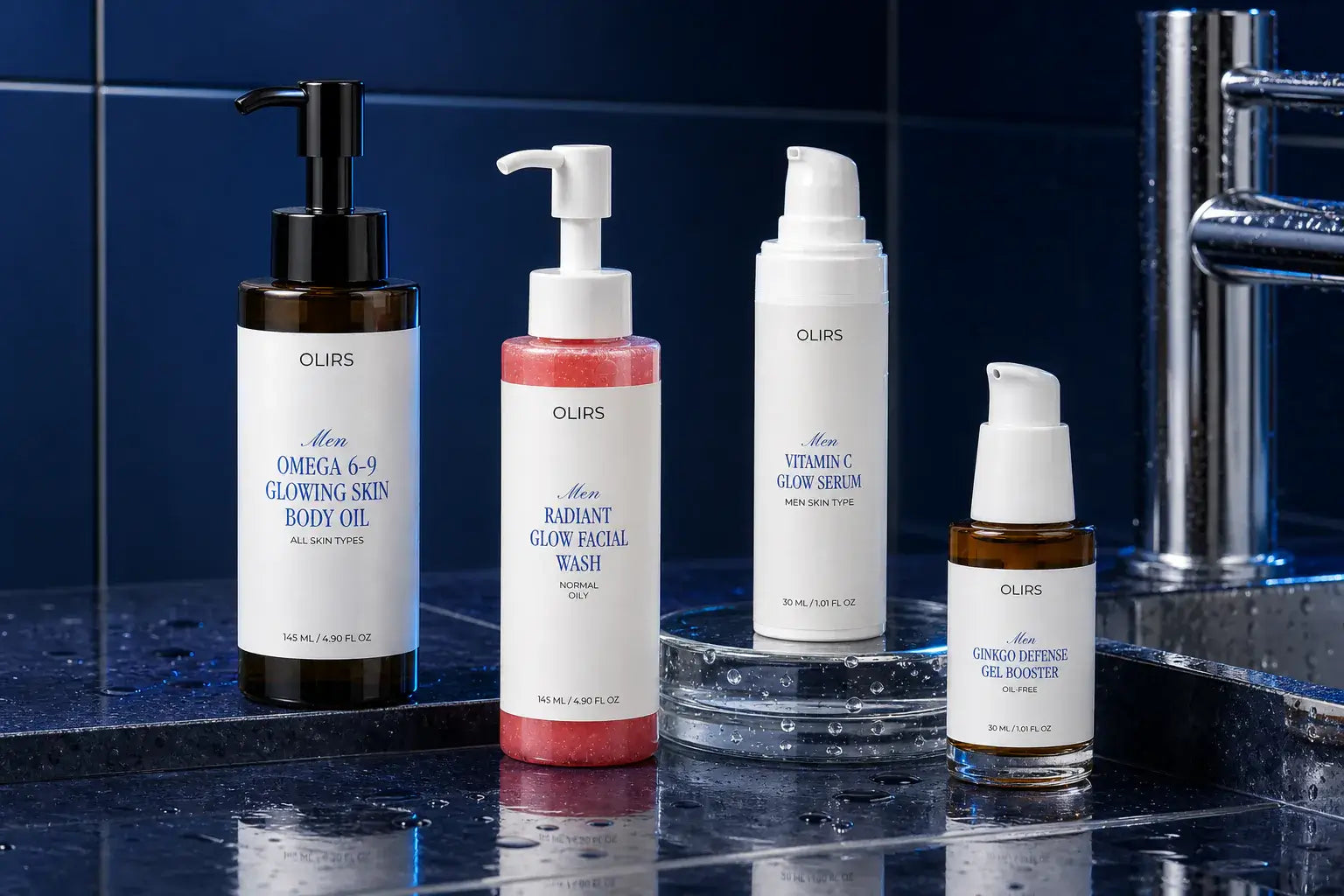
- A gentle, non-stripping cleanser — something like radiant glow facial wash that won't undo the barrier work the serum is about to do
- A vitamin C serum with a stated concentration, ideally in the 10-15% range — the Vitamin C Glow Serum lists stabilised vitamin C plus ferulic acid, which helps the active hold up better once the bottle is open
- A moisturizer to seal the layer in — a hydrating cream keeps skin from feeling tight after the serum absorbs
- A broad-spectrum SPF 30 or higher for daytime use
- 90 seconds, morning and night — this is not a routine that eats your schedule
The steps
1. Check concentration and pH before you commit to a routine
Most vitamin C serums that work sit between 10% and 15% concentration, with a pH under 3.5 for the pure L-ascorbic acid form. Higher isn't automatically better — above 20%, irritation risk climbs without much added benefit. Read the label. If a brand won't tell you the percentage, that's information too.
2. Cleanse first, every time
Applying vitamin C over leftover oil, sweat, or sunscreen from the day blocks absorption and can destabilize the active faster. A cleanser — radiant glow facial wash works for this — clears the surface without stripping it dry, which matters because a compromised barrier is what turns a vitamin C routine into a stinging one.
3. Apply on completely dry skin
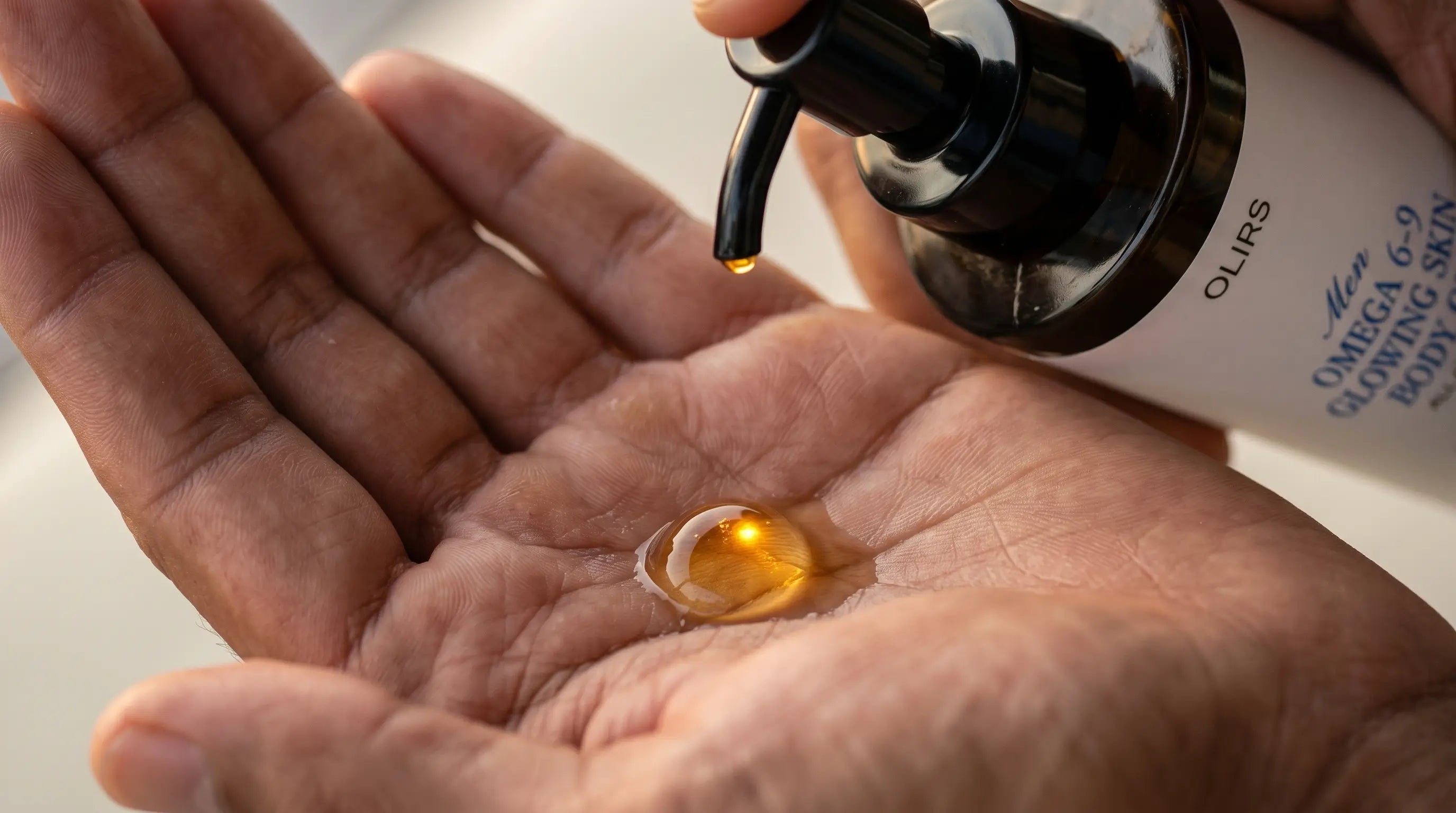
Water on the skin dilutes the concentration and speeds oxidation on contact. Wait a full 60 seconds after cleansing, then apply 2 to 3 drops — face and neck, nothing more. More product doesn't mean more result once the skin is already saturated.
4. Wait before the next layer
Give it 20 to 30 seconds to absorb before moisturizer goes on. Layering wet products together dilutes both and can cause pilling — that gray, rubbery texture that means neither product is doing its job.
5. Seal it with a hydrating layer
Vitamin C serum alone can feel tight on skin that runs dry. A moisturizer like hyaluronic acid face cream for men locks in the layer underneath and keeps the skin barrier from working against you overnight.
6. SPF every morning, no exceptions
Vitamin C and sunscreen work as a pair — the antioxidant helps the skin handle daily exposure, and SPF is what actually blocks the UV damage that causes the uneven tone vitamin C is trying to help with. Skipping SPF and expecting vitamin C to do that job alone is the single most common reason men give up on it after a month.
7. Store it away from light and heat
Amber or opaque bottles exist for a reason. Keep the cap tight, keep it out of direct sun on a windowsill, and don't store it somewhere it heats up — like a car in summer. A serum that turns yellow, orange, or brown has oxidized. It won't hurt you. It also won't do much for you anymore.
8. Give it 8 to 12 weeks before judging it
Skin cell turnover takes time. A single week of consistent use won't show anything. Appearance-based changes — brighter-looking tone, less visible dullness — show up gradually, and only with daily use, not three times a week.
Common mistake across all eight steps: applying vitamin C and a retinol-type active (including bakuchiol) in the same routine, same night. Both are potent on their own. Stacked, they raise irritation risk without a clear appearance benefit. Alternate them — vitamin C in the morning, a retinol alternative at night — instead of layering both at once.


Troubleshooting
The serum turned orange or brown. That's oxidation — the vitamin C has broken down and lost most of its function. It's not dangerous, just inactive. Replace the bottle and check the cap seal on the new one.
It stings on application. Either the concentration is too high for your skin right now, or your barrier is already compromised from over-exfoliating, hot showers, or too many actives at once. Drop to every-other-day use for two weeks before deciding it's not for you.
No visible change after a month. Check your order — vitamin C works best on clean, dry skin, sealed with moisturizer, paired with daily SPF. Missing any one of those weakens the rest. Also check you're not comparing week one to week four; appearance-based results build gradually.
Pilling under moisturizer. You're either applying too much product or moving to the next step before the vitamin C absorbs. Two to three drops, 20 to 30 seconds, then moisturizer — not less time, not more product.
It feels sticky or heavy. You're likely stacking vitamin C with too many other actives in one routine. Simplify to cleanser, vitamin C, moisturizer, SPF. Add other actives back one at a time.
Conflicts with your other serum. Vitamin C and AHA exfoliants both lower skin pH and can cause irritation stacked together. Run one in the morning, the other at night, or alternate days entirely.
Tools and resources
- Vitamin C Glow Serum — the active itself, stabilised with ferulic acid
- radiant glow facial wash — cleanser step, non-stripping
- hyaluronic acid face cream for men — seals the layer, keeps skin from feeling tight
- A broad-spectrum SPF 30+, applied daily regardless of weather
- The product's own INCI list — read it before you trust any brand's percentage claim, Olirs included
What to do next
If dark spots or uneven tone are the actual problem you're solving for, not just general dullness, the mechanism is slightly different and the routine order matters more. Read vitamin C serum for dark spots on men's skin for how to layer it against targeted actives without cancelling either one out.
FAQ
What's the best way to use vitamin C serum for men's skin?
Apply 2 to 3 drops on clean, dry skin, wait 20 to 30 seconds, then follow with moisturizer and SPF in the morning. Skipping the SPF step is the most common reason men don't see results.
How much vitamin C serum should I apply?
Two to three drops covers the face and neck. More product doesn't absorb faster or work harder once the skin is saturated, it just wastes the bottle.
Can I use vitamin C serum every day?
Yes, daily use is standard and most formulas are built for it. If it stings, drop to every other day for two weeks while your skin adjusts.
Is vitamin C better in the morning or at night?
Morning, paired with SPF, is the standard recommendation because the antioxidant support pairs with daytime UV exposure. It still works at night, just without that pairing benefit.
Can I mix vitamin C serum with retinol or bakuchiol?
Not in the same application. Both are potent actives and stacking them raises irritation risk without a clear added benefit. Alternate nights instead, or use vitamin C in the morning and the other active at night.
How long does an opened vitamin C serum last?
Roughly 2 to 3 months once opened, shorter if it's stored somewhere warm or bright. A color change to yellow, orange, or brown means it has oxidized and lost potency.
Why did my vitamin C serum turn orange?
Oxidation — exposure to air, light, or heat has broken down the ascorbic acid. It won't harm your skin, but it also won't do much for it anymore. Replace the bottle.
Does vitamin C serum work on dark spots?
It can help fade the appearance of uneven tone over consistent daily use, though it works slower on established dark spots than on general dullness. Pairing it with daily SPF matters more here since new sun exposure undoes the progress.
One last thing
Olirs' Vitamin C Glow Serum carries COSMOS NATURAL certification, which means Ecocert audited every ingredient and how it was extracted before the certification was granted — that's a third party checking the claim, not the brand making it. Read the INCI on any vitamin C serum, this one included, before you decide it's worth the shelf space in 2026.